NC BRAINS
DRNC’s NC BRAINS (Brain Resources and Injury Needs Screening) campaign aims to facilitate advancements in provider education, address the need to improve North Carolina’s brain injury identification systems and ensure connection to community-based services. If you have a disability-related question that is not answered here or on our resources page, please contact us.
- Updated on: August 20, 2026
Learn about the NC BRAINS screening and training program. For more information on the OBISSS
About the Program
What is the NC Brains Program?
NC BRAINS stands for North Carolina Brain Resources and Injury Needs Screening.
The NC BRAINS campaign improves North Carolina’s brain injury identification systems, advances provider education, and connects individuals to community-based services to enhance the quality of life for people affected by brain injury.
I am a provider or organization and would like more educational resources.
How can the NC BRAINS program help?
The NC BRAINS program offers educational support to various providers and organizations in North Carolina, including tip sheets on symptoms to help address individuals’ challenges All North Carolinians will also have access to two free training courses: Brain Injury 101 and The Importance of Brain Injury Screening / How To Screen.
Additional specialized training will be available to providers upon request and is at no cost to them or an organization. If you are an organization or individual provider interested in receiving additional educational support such as training, please click fill out our Educational Support Form. Some further training that can be requested are:
- Brain Injury and Mental Health
- Brain Injury and Substance Use Disorder
- Brain Injury and Vulnerable Populations
- Brain Injury and the Criminal Legal System
- Brain Injury and Youth
Visual Guides
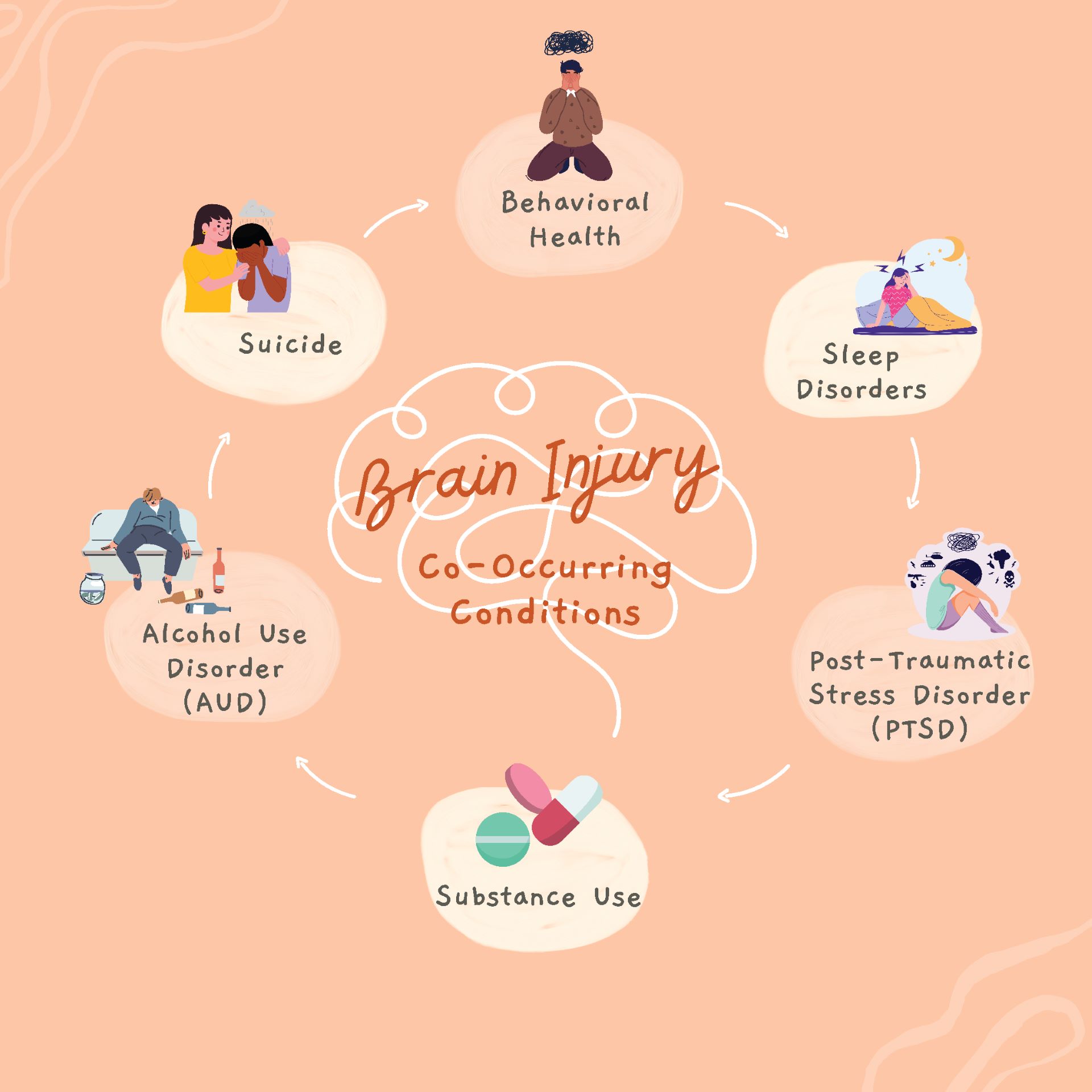
Brain Injury Co-Occurring Conditions
This image mentions co-occurring conditions that often accompany brain injuries, including:
- Sleep disorders,
- Post-traumatic stress disorder (PTSD),
- Substance Use,
- Alcohol Use Disorders,
- Suicide,
- Behavioral Health
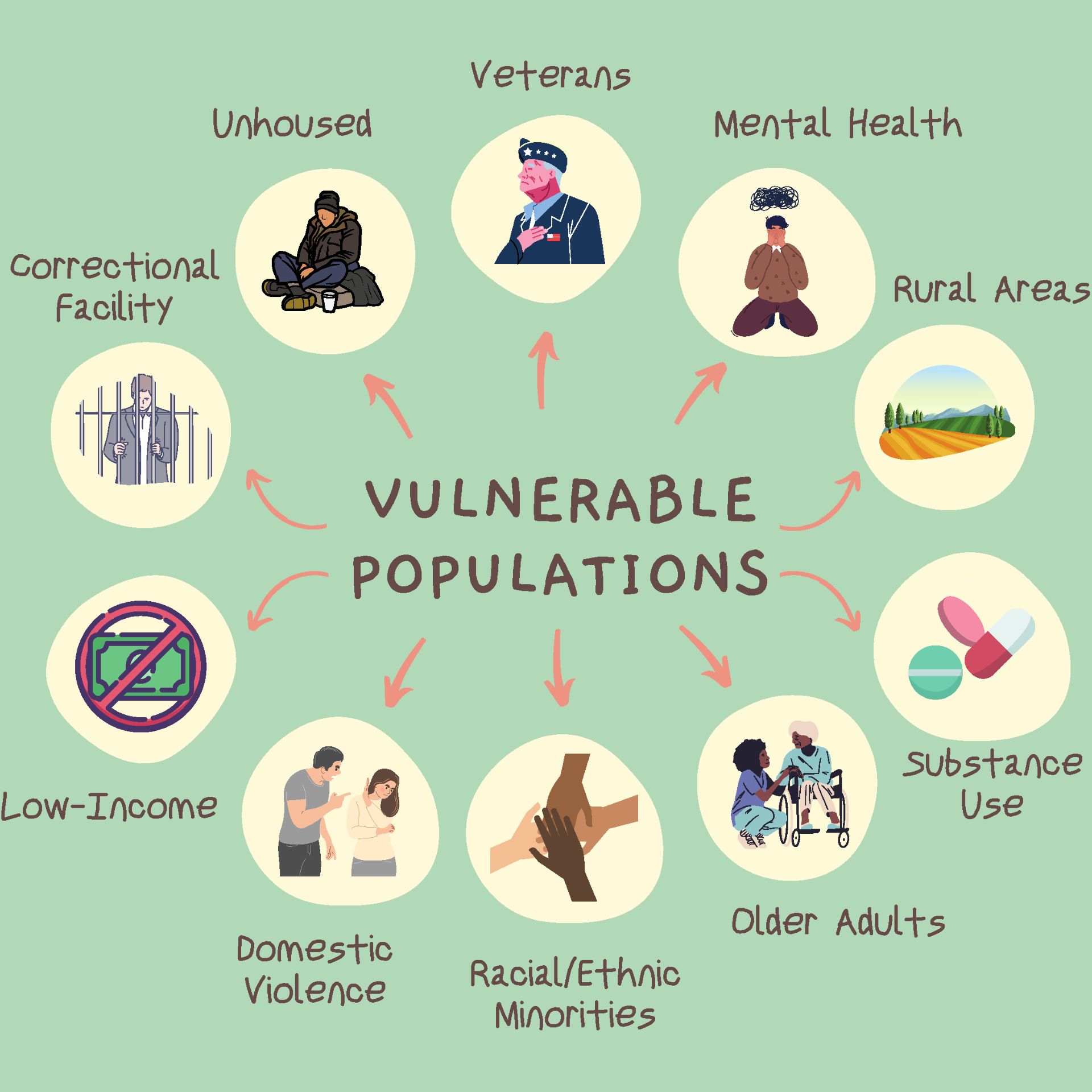
Vulnerable Populations
This image highlights vulnerable populations affected by brain injuries, such as:
- Veterans,
- The unhoused,
- Individuals with mental health issues,
- Those in correctional facilities,
- Those who live in rural areas,
- Low-income groups,
- Survivors of domestic violence,
- Substance use,
- Older adults,
- Racial/ethnic minorities,
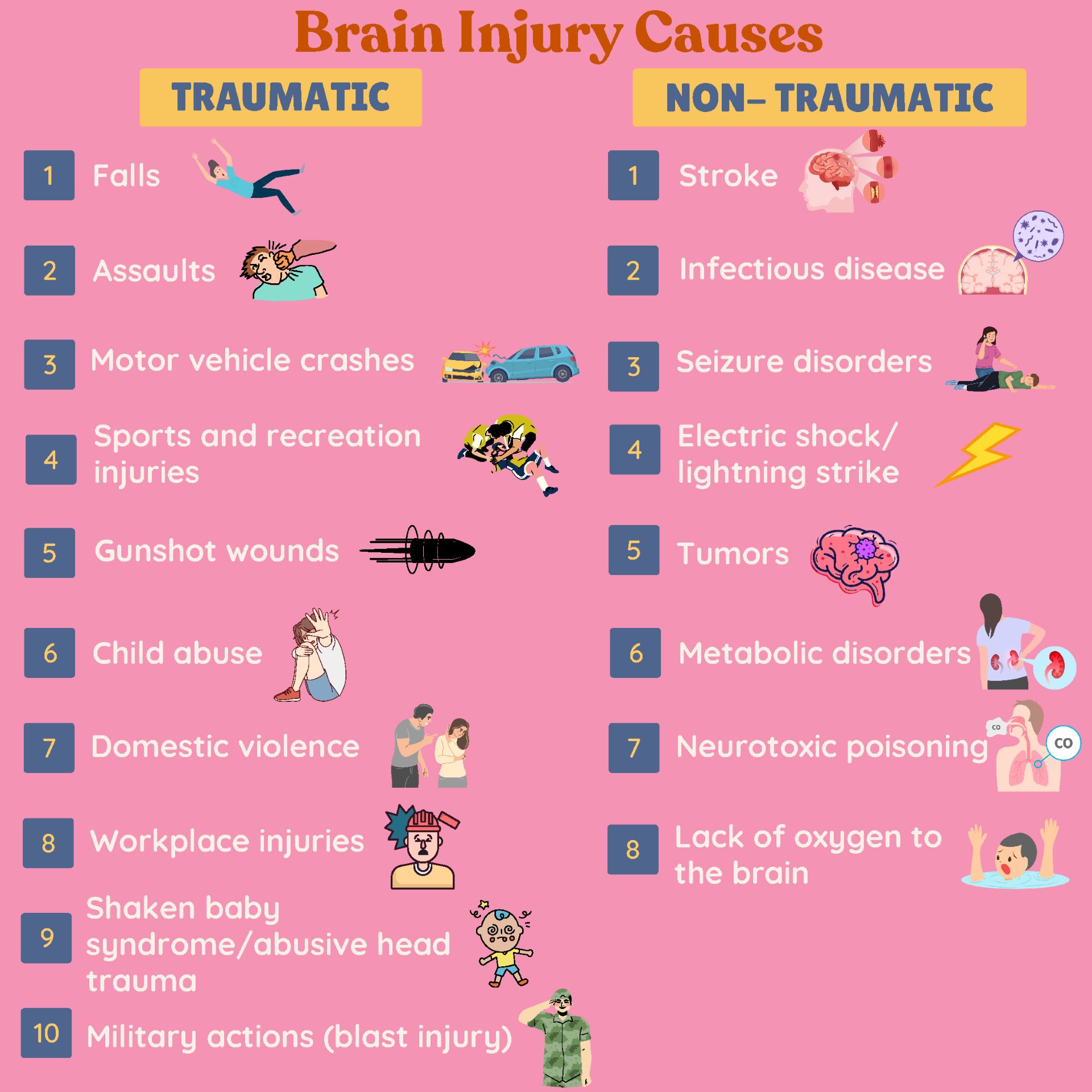
Brain Injury Causes
This image outlines various causes of brain injury, categorized into traumatic and non-traumatic types.
- Traumatic causes include falls, assaults, motor vehicle crashes, sports injuries, gunshot wounds, child abuse, domestic violence, workplace injuries, shaken baby syndrome, and military actions.
- Non-traumatic causes include stroke, infectious diseases, seizure disorders,
electric shock/lightning strikes, tumors, metabolic disorders, neurotoxic
poisoning, and lack of oxygen to the brain.
Forms
NC BRAINS Training Request Form
NC BRAINS Training Request Form
Share your Story
Share your story
Technical Assistance
If you require technical assistance, please contact the NC BRAINS Program Administrator.
NC BRAINS Project Manager:
Desireé Gorbea-Finalet braininjuryinfo@disabilityrightsnc.org
919-500-4462 or 743-895-0032.
Jump to Section
Submit your Story
Are you a brain injury survivor? Are you a caregiver of someone with a brain injury? Would you like to share your story with us? We want to hear from the brain injury community on their experiences.
Technical Assistance
If you require technical assistance, please contact the NC BRAINS Program Administrator.